The Short Answer
To look polished in professional headshots, keep grooming simple and intentional. Get your hair ready before the session, use natural non-shiny makeup if you wear it, trim or shave facial hair cleanly, clean your glasses, hydrate, sleep well, and avoid trying new products or styles immediately before your shoot. Preparation helps. Perfection is not required.
The Goal Is Polished, Not Overdone
A polished headshot is not a retouched or transformed version of you. It is a clear, clean, professional image of the person you actually are. Overdoing makeup, hair, or grooming in an attempt to look better on camera often produces the opposite result.
Small details matter because studio lighting and close framing pick them up. A stray hair, visible skin shine, or smudged glasses will appear in the photo. These are easy to address beforehand and difficult to fix after.
The goal is to arrive looking like you had a good day, rested, presentable, and ready. The session handles the rest.
This guide covers grooming for everyone. Men: the sections most relevant to you are Hair, Facial Hair and Men's Grooming, Skin and Shine, and What Not to Do Before the Shoot. Women: see Hair, Makeup, Skin and Shine, and Eyes, Lips, and Sleep. Glasses and Hands apply to everyone.
Hair
If you need a cut, schedule it three to seven days before the session. This gives any freshly cut lines a chance to settle and gives you time to correct it if the cut was not what you expected.
Avoid experimenting with a new colour or style immediately before the shoot. New colour that sits unexpectedly, or a style you have not worn before, introduces variables you will not have time to fix.
If you plan to use professional styling, arrange it for the same day so it arrives fresh. Hair that was done the day before and slept on is not the same as hair that was done that morning.
- Check for flyaways or flat sections before you leave the house.
- Bring a comb, brush, or whatever you normally use for touch-ups.
- If you are shooting outdoors or walking to the studio in wind, plan for extra time to reset.
Makeup
This section is for those who wear makeup in professional settings. If that is not you, skip to Facial Hair and Men's Grooming below.
Wear makeup if you normally would for work or professional events. The goal is for the photo to look like you in a professional context, and if that includes makeup, leave it out at your own risk. An image that looks unlike how you typically present creates a different kind of disconnect.
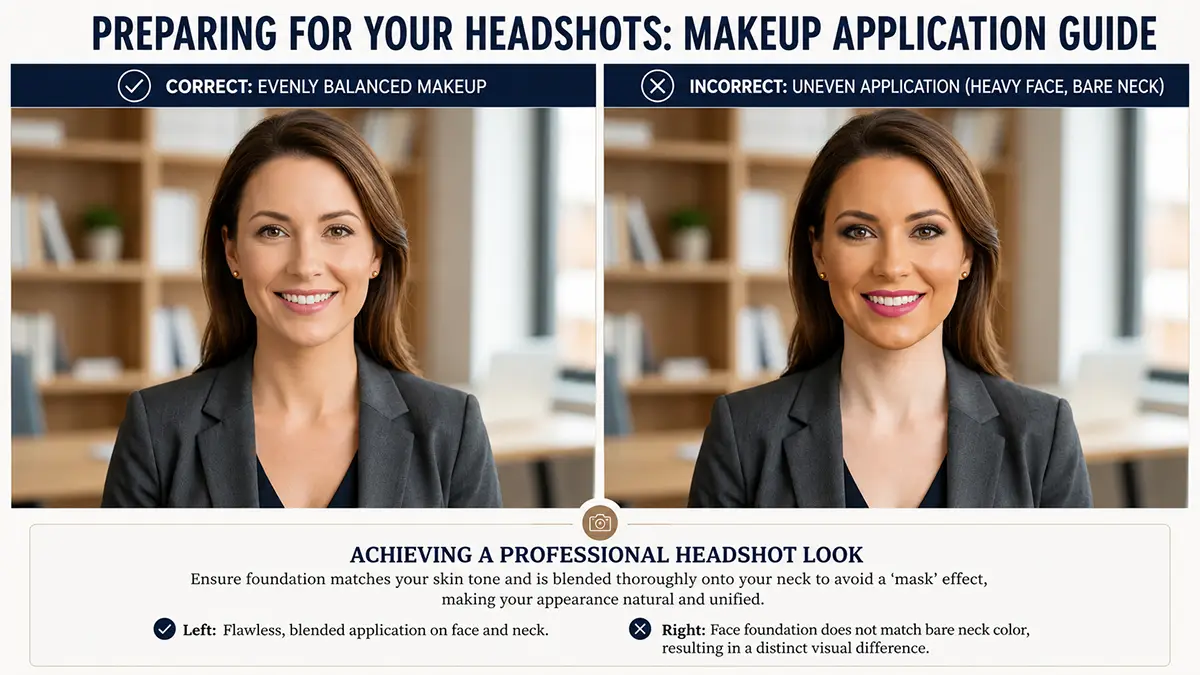
Keep the finish natural. Glossy, glittery, or highly reflective products catch studio lighting and create areas of shine that are difficult to retouch cleanly. Matte and satin finishes photograph better.
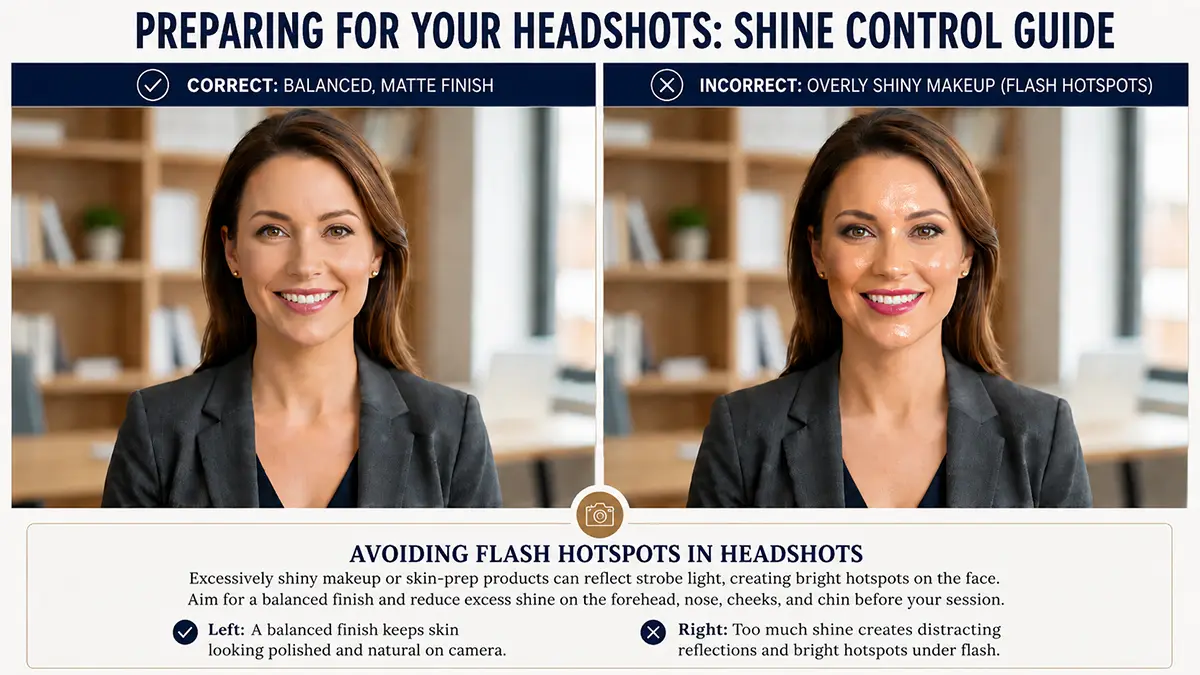
- Use powder to control shine if needed, particularly on the forehead, nose, and chin.
- Avoid heavy contouring or bold colour choices unless that is genuinely how you dress for professional settings.
- Do not try a completely new makeup style for the first time on shoot day.
- If you want professional makeup for the session, book a makeup artist and schedule it for the same day.
Facial Hair and Men's Grooming
Arrive with your facial hair in a deliberate state. A clean shave or a well-maintained beard both photograph well. The in-between stage, where growth is visible but not shaped, rarely photographs as intended.
- If shaving, do it the morning of the session. If you know razor bumps or redness are likely, shave the evening before instead.
- If keeping a beard, trim and shape it a day or two before so any redness from trimming has settled.
- Check the neckline. A slightly uneven neckline is visible in a headshot.
- Check for stray hairs at the brow line, in and around the ears, and at the nostrils. Studio lighting and close framing pick these up in a way everyday lighting does not.
- Avoid heavy cologne or aftershave the morning of the session. Strong fragrance in a closed studio is noticeable.
Skin and Shine
Studio lighting reflects off oily, shiny, or highly moisturised skin. This does not mean you should arrive with dry skin, but it does mean certain products are worth avoiding before the session.
- Skip heavy lotion, body oil, or very thick moisturiser on the face and neck within four hours of the session.
- Avoid trying new skincare products in the days before the shoot. A reaction to a new product on shoot day is difficult to address.
- Drink water consistently in the days leading up to the session. Well-hydrated skin photographs better than dehydrated skin.
- Bring blotting sheets or powder if you tend to get oily during the day.
- Avoid any glossy or wet-finish product on the face on shoot day.
If you have a specific skin concern, such as a reaction or flare-up on the day of the shoot, mention it at the start of the session. Lighting and angle adjustments can sometimes help.
Eyes, Lips, and Sleep
Sleep is the most underestimated grooming step. Fatigue reads clearly in portraits, especially around the eyes. Arrive rested. This is not something editing addresses reliably.
- Get a solid night of sleep before the session. If that is not possible, avoid anything that will increase puffiness or redness.
- Avoid heavy alcohol the night before. It shows in the face.
- If your eyes tend to run or redden in bright light, bring eye drops if you use them.
- Apply lip balm the day before and the morning of the session if your lips tend to dry out. Apply it early enough to absorb before the shoot.
- Avoid very dark or very bold lip colours unless they are a deliberate part of your professional presentation.
Hands and Nails
Hands appear in headshots more often than most clients expect. Crossed-arm poses, chin-resting poses, and any framing that includes hands in or near the frame will show nail condition.
- Clean and trim nails before the session.
- Nail polish is fine; chipped or very overgrown nails are not ideal for close framing.
- You do not need a professional manicure. Clean and neat is the standard.
If you are unsure whether hands will be included in your shots, ask at the start of the session. For most standard headshots, hands are not in frame, but it is worth knowing.
Glasses
If you wear glasses regularly, you should wear them for your headshot. A photo without glasses when you always wear them in professional settings will not look like you in context.
- Clean your lenses thoroughly before arriving. Smudges and fingerprints show clearly under studio lighting.
- Avoid transition lenses. They can hold a tint under studio lighting and the result is difficult to correct in editing.
- Be aware that blue-light reflective lens coatings can produce a visible sheen under flash or studio lights. This is difficult to remove cleanly after the fact.
- If possible, bring a backup pair with regular lenses.
- If removing lenses temporarily is safe and comfortable for you, it is an option to reduce glare, but it is not required.
Glasses glare is better managed during the shoot through lighting and angle than in editing. If this is a concern, mention it before the session starts. For more on glasses and headshots, see What to Wear for Professional Headshots.
What Not to Do Right Before the Shoot
Most grooming mistakes happen in the 24 hours before a session. These are the ones worth actively avoiding:
- Do not try a new skincare product. Reactions and breakouts can appear within hours of application. Stick to products your skin already knows.
- Do not get an experimental haircut or colour. If it does not work, there is no time to recover before the session.
- Do not apply heavy lotion or body oil to the face. Shine is introduced and it does not fully blot away.
- Do not use glossy or wet-finish makeup. It photographs as shine, not glow.
- Do not eat a very heavy or greasy meal immediately before. It can cause bloating and sometimes shows in the face.
- Do not arrive rushed, sweaty, or stressed. Plan your travel so you arrive with a few minutes to settle before the shoot starts.
- Do not assume editing will fix everything. Retouching handles minor issues well. It does not reliably fix problems that were present throughout the entire shoot.
Frequently Asked Questions
- Should I shave before a headshot?
- Yes, if a clean shave is the look you want. Shave the morning of the session if possible. If you know that shaving causes visible redness or razor bumps, shave the evening before instead and let the skin settle overnight. What to avoid is arriving in an in-between state where growth is visible but not intentional.
- Should I get a haircut before my headshot?
- If you need one, schedule it three to seven days before the session. A fresh cut the day before does not give you time to correct anything unexpected, and very freshly cut lines can look sharper than intended on camera. If your hair is fine as it is, no cut is needed.
- How do I avoid shiny skin in headshots?
- Skip heavy moisturisers or oils on the face within a few hours of the session. Bring blotting sheets or powder if you tend to get oily during the day. Avoid glossy products. Good skin hydration in the days leading up to the session helps more than any product applied the morning of. If shine appears during the shoot, it can be addressed on the spot.
- Should I wear makeup?
- If you wear makeup in professional settings, yes. The photo should look like you in a professional context. Keep the finish natural and matte where possible. Avoid trying a new makeup style on shoot day. If you want professional makeup, book a makeup artist and schedule it for the same morning.
- Should I clean my glasses before the session?
- Yes. Smudges and fingerprints on lenses are clearly visible under studio lighting and can show in photos. Clean them thoroughly before you leave the house. If you have transition lenses or a strongly reflective coating, bring a backup pair if possible and mention the glasses at the start of the session.
- Do my nails matter for headshots?
- For most standard headshots, hands are not in frame and nails will not be visible. For any shot that includes hands, neat and clean nails matter. Chipped polish or very overgrown nails are noticeable at close framing. If you are unsure whether your shots will include hands, ask at the start of the session.